
Your Garage Door Cable May Have Failed—Here’s How to Respond Safely
The emergency-release cord disconnects the door from the opener trolley, but it does not unload the spring-and-cable system.
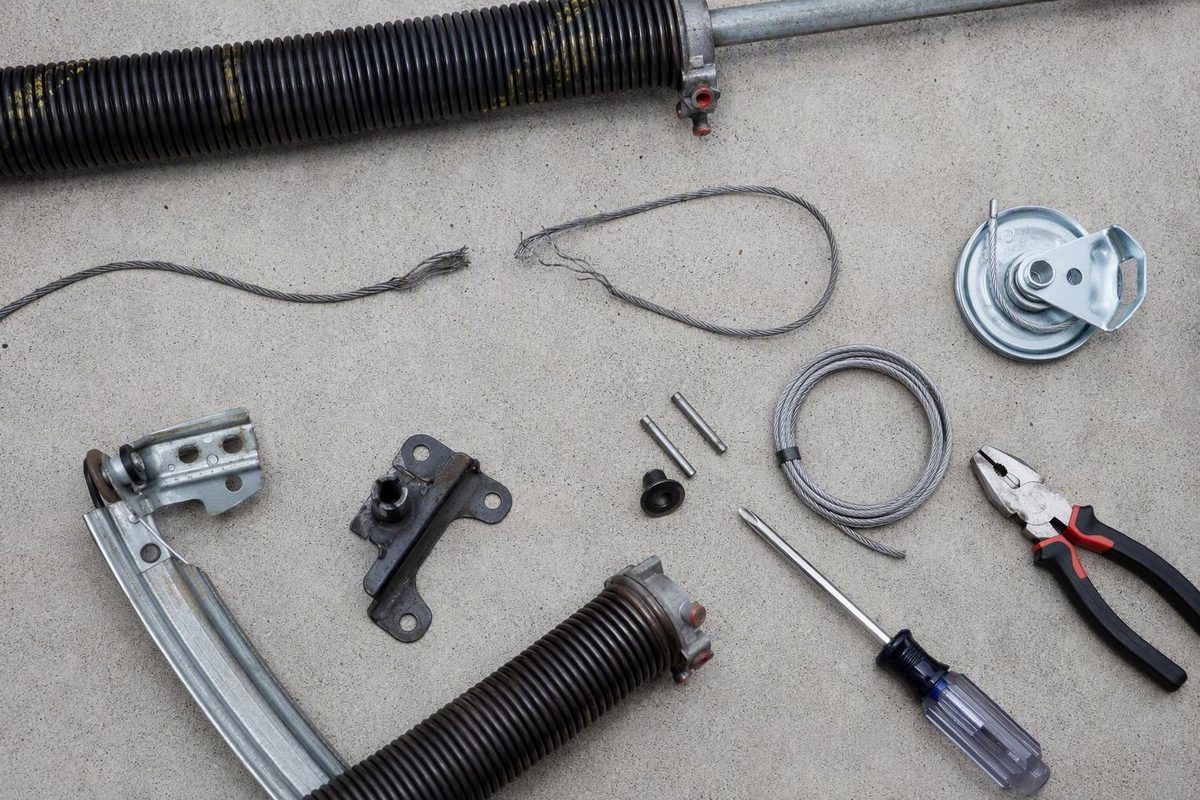
A broken garage door cable is not simply a loose wire. It is part of a counterbalance system: springs store energy, while lift cables transfer spring-assisted force to the door. If a cable breaks, frays, slips, or loses tension, the door may become crooked, jammed, unevenly supported, or capable of unexpected movement.
For a homeowner, the safe response is straightforward: stop operating the door, keep everyone clear, avoid touching or moving any part of the system, document only what can be seen from a safe distance, and contact a qualified garage-door technician.
Do This First When a Garage Door Cable May Be Broken
Immediate response
- Stop using the wall control, remote, and exterior keypad.
- Keep adults, children, and pets outside the door’s travel area.
- Do not stand, walk, work, or park beneath an elevated door.
- Do not force the door manually.
- Do not touch a loose, frayed, dangling, or displaced cable.
- Do not touch the springs, drums, pulleys, bottom brackets, tracks, or related counterbalance hardware.
- Tell a qualified garage-door technician whether the door is closed, elevated, crooked, jammed, or visibly off-track.
A damaged cable can leave a door tilted, stuck, unsupported on one side, or prone to unexpected movement. Manufacturer guidance recommends professional cable service because the cables operate as part of a spring-powered system that retains stored tension. Clopay explains the relationship between cable damage, spring tension, and unstable door movement.
Do not cut or reconnect a cable. Do not remove a bottom bracket, adjust a drum or pulley, alter spring tension, straighten the door, or try to return a roller or cable to position. These actions interfere directly with the hardware that transfers or controls counterbalance force.
The door’s position is useful information for the repair company, but it is not a prompt for a homeowner to move it. Whether the door is closed, partly open, fully open, crooked, or off-track:
- Stop operating it.
- Clear the surrounding area.
- Do not move or brace it.
- Describe its position to the technician.
- Obtain situation-specific professional guidance.
If a vehicle is trapped, an entry is obstructed, or people cannot avoid passing near the door, tell the repair company when requesting service. Those circumstances may affect its response, but they do not make forcing or adjusting the door a safe homeowner task.
Do not treat the emergency-release cord as a universal solution. The cord disconnects the door from the opener trolley; it does not unload the spring-and-cable system. Manufacturer and repair-provider guidance supports leaving an unstable door alone rather than trying to open or close it manually after suspected cable failure. Palmer Garage Doors summarizes the combined spring-tension and uncontrolled-movement hazards.
Likewise, switching off or unplugging the opener is not the same as making the door mechanically safe. Electrical isolation does not remove stored tension from springs, cables, drums, pulleys, or bottom fixtures.
Signs of a Broken, Frayed, or Displaced Cable
Useful observations can be made without touching the door. Look only from outside its potential travel path, and never step beneath an elevated section for a better view.
Visible clues include:
- Broken, separated, or unraveling strands
- Rust or corrosion
- A loose cable end
- A cable hanging beside the door or lying on the floor
- One cable appearing taut while the other appears slack
- A cable appearing outside its drum or pulley
- A loop where the cable run would normally appear straight
- One lower corner sitting below the other
- A visibly tilted door
- A roller, track, or bracket appearing displaced near the affected side
Operational clues you may have noticed before stopping use include:
- Crooked or uneven travel
- Jerking or shuddering
- Jamming during opening or closing
- Stopping partway through a cycle
- Failure to lift
- Faster-than-normal descent
- One side moving before or farther than the other
- The opener running while the door does not rise normally
- A door suddenly becoming difficult or impossible to move
Audible clues include:
- A sharp snap or bang
- Scraping after the initial noise
- Grinding, popping, or repeated clicking
- Squeaking accompanied by uneven movement
- An opener or other hardware sounding strained
These signs are consistent with cable trouble, but no single symptom proves what failed. Commercial repair guidance commonly lists unraveling strands, dangling cable, unequal tension, displacement from a drum or pulley, crooked travel, and snapping or grinding sounds as warning signs. These observations should be used to describe the problem—not to diagnose it by operating the door again.
When one lift cable fails, one side may lose support or movement while the opposite side remains engaged. The door can then tilt, and the remaining cable may carry increased demand.
A slack cable is not necessarily snapped. It may be intact but displaced from a drum or pulley, or it may have lost tension because a spring or another counterbalance component failed. The distinction matters to the eventual repair, but it does not change the homeowner response.
Do not activate the opener to reproduce a noise, improve a photograph, or confirm that one corner moves first. Record only what is already visible or what happened before operation stopped.
Cable Failure or Something Else? A Symptom Comparison
These clues overlap and cannot establish a definitive remote diagnosis. A cable may fail first, or it may become loose or damaged because something happened elsewhere in the spring, drum, pulley, bearing, bracket, track, roller, or alignment system.
| Possible fault | Clues that may fit | Why the clue is not conclusive |
|---|---|---|
| Snapped or frayed lift cable | Visible strand damage, a separated or loose end, one dropped corner, uneven lifting, or a crooked door | Damage may be the original failure or the result of misalignment, impact, or another component fault |
| Cable off a drum or pulley | Cable appears intact but slack, looped, or displaced; one side may not lift normally | A spring fault, drum problem, damaged track, or uneven movement may have caused the displacement |
| Broken or malfunctioning spring | Door fails to lift normally, appears unbalanced, or has a loose cable whose strands look intact | Cable tension depends on the spring system, so cable slack can be a secondary symptom |
| Track or roller damage | Track appears bent or displaced, a roller is out of position, or the door binds or sits out of alignment | Cable and track damage can coexist, especially after impact or off-track movement |
| Opener fault | Motor runs, hums, or stops without moving the door as expected | Motor noise does not establish an opener fault when the door is crooked, jammed, immobile, or mechanically unbalanced |
A broken spring is particularly easy to confuse with a cable problem. Because the spring supplies counterbalance force, loss of spring function can leave a lift cable loose even when its strands remain intact. Conversely, a failed cable can make the door bind and make the opener appear defective.
Tracks and rollers create similar ambiguity. A door that binds or leaves its normal track path may load the two sides unevenly. The cable may then slip, fray, or lose its normal route. Replacing the visible cable without finding an underlying alignment problem could leave the original fault uncorrected.
A technician therefore needs to establish the likely sequence:
- Did the cable wear, fray, or corrode until it failed?
- Did it leave a drum or pulley after tension changed?
- Did a spring malfunction first?
- Did a worn drum, pulley, bearing, or bracket affect cable tracking?
- Did track displacement, a roller problem, or an impact tilt the door?
- Did continued opener operation worsen an existing mechanical fault?
Motor noise is similarly ambiguous. An opener cannot establish whether a crooked or immobile door has a cable, spring, track, or opener fault. Opener replacement should not be authorized solely because the motor ran while the door failed to rise.
How Garage Door Cables Work—and Which Cable You Are Seeing
A garage door opener initiates movement, but the counterbalance system makes that movement manageable. Springs store and release energy. Lift cables transfer the spring-assisted force to the door and help both sides move together.
Residential doors do not all use the same arrangement. Two common configurations are:
- Torsion-spring system: One or more springs are mounted on a shaft above the opening. Lift cables connect near the lower corners of the door and wind around drums near the ends of that shaft.
- Extension-spring system: Springs generally run alongside the horizontal tracks. Lift cables operate through a pulley-based arrangement associated with the springs and door.
Manufacturer guidance distinguishes these layouts and explains that cables, springs, drums, and pulleys function as connected counterbalance components. Garaga describes common torsion and extension arrangements.
An extension-spring system may also have a safety cable running through the center of each spring. That is different from a lift cable. Its function is to help restrain spring components if an extension spring separates; it is not the cable that transfers lifting force to move the door.
A hanging cable can therefore serve different functions depending on the system. Location may provide a clue, but do not pull, trace, or handle it to identify it. A displaced cable may no longer follow its normal route.
Why Cable Work Is Not a Safe DIY Repair
A garage door cable may resemble an ordinary length of braided steel, but it operates beside spring-powered hardware. Stored tension can remain in the counterbalance system even when the door is closed. If the door is elevated or tilted, the possibility of uncontrolled movement adds a separate hazard.
Turning off or unplugging the opener does not neutralize that mechanical energy. Nor does the emergency release unload the springs or make the cable, drum, pulley, or bottom bracket safe to handle.
Do not:
- Run another opener cycle
- Force the door by hand
- Lift or lower a damaged or unstable door
- Pull the release cord on an elevated, crooked, or unstable door
- Cut or reconnect a cable
- Put a displaced cable back on a drum or pulley
- Loosen or rotate a cable drum
- Adjust a pulley
- Remove or loosen a bottom bracket
- Alter spring tension
- Straighten or reposition the door
- Use clamps, ladders, lumber, or other objects to brace it
- Work beneath an elevated door
These prohibitions reflect the core manufacturer guidance: damaged cables operate within a tensioned spring system, and replacement should be left to trained professionals.
Safe homeowner involvement is limited to four tasks:
- Stop operation.
- Isolate the area.
- Document visible conditions from a safe distance.
- Communicate those conditions to a qualified technician.
What Causes a Garage Door Cable to Break or Go Slack
A cable may deteriorate gradually, move out of position, or react to another component failure. Inspection—not appearance alone—must determine the cause.
Repeated cycling and strand fatigue: Each door cycle bends and loads the cable. Over time, individual strands may wear, separate, or fray. There is no reliable universal service life because door design, frequency of use, environment, hardware condition, and installation vary.
Rust and corrosion: Moisture can corrode steel strands, and salt or other corrosive material carried into a garage may contribute. Corrosion is a reason to stop using the door and arrange inspection when it appears with cable symptoms, rather than testing the system through additional cycles.
Drum or pulley problems: Worn, damaged, or misaligned drums and pulleys can interfere with cable tracking. An intact cable may become slack or displaced instead of breaking.
Track, roller, or alignment trouble: A door that binds, tilts, or leaves its normal track path can load the two sides unevenly. The cable problem may be a consequence of the door no longer traveling squarely.
Spring malfunction: Cable tension depends on spring operation. If a spring fails or stops functioning correctly, a cable may lose tension, appear loose, or track abnormally. The visible cable can therefore be a symptom rather than the root fault.
Improper installation or incompatible parts: Incorrect routing, poor alignment, or a cable that does not match the door and counterbalance system may affect operation. Compatibility cannot be judged safely by visual similarity alone.
Impact: A vehicle, tool, storage item, or other object striking the door or track can disturb alignment and associated hardware.
Forcing a stuck or frozen door: Repeatedly activating an opener against a door that cannot travel normally can contribute to uneven loading or displacement. The underlying obstruction or mechanical fault should be identified rather than overcome through repeated cycles.
Repair-provider guidance reports wear, corrosion, spring failure, off-track operation, drum misalignment, improper installation, and impact as possible contributors. Castle Garage Doors provides an overview of these interconnected causes.
Not every break is preventable, and failure does not automatically prove neglected maintenance. The practical question is whether the cable failed independently or another defect caused or accelerated the damage. That is why replacing only the most visible failed part may be incomplete.
What Professional Inspection and Repair Usually Involve
Professional service should begin with the condition of the whole door rather than immediate cable replacement. At a high level, a technician will assess and control the door and counterbalance system, inspect related components, install compatible parts as needed, restore balance, and test travel. These are system-specific professional tasks, not homeowner instructions.
The inspection scope may include:
- Both lift cables
- Spring type and condition
- Cable drums or pulleys
- Bottom brackets and cable attachment areas
- Bearings and shaft hardware, where present
- Vertical and horizontal tracks
- Rollers
- Door and track alignment
- Evidence of impact or off-track travel
- Door balance after repair
- Opener operation after mechanical movement is restored
- Full opening and closing travel
The replacement cable must match the door and counterbalance arrangement. Its type, length, construction, and dimensions should be selected after the existing system and door requirements have been identified.
Replacing both lift cables is a common but condition-dependent recommendation. It may be appropriate when the cables form a matched pair, have served together, show similar corrosion, or have developed uneven wear. One provider describes pair replacement as typical while also recommending inspection of the drums, brackets, and spring tension. Absolute Garage Doors outlines that practice.
That does not establish that both cables must be replaced in every case. Nor can replacing only one be recommended remotely. The technician should explain the condition of each cable and how the proposed scope affects matching, balance, and travel.
Ask these questions before authorizing work:
- What appears to have caused the failure or displacement?
- Is the cable broken, frayed, or off its drum or pulley?
- Are both cables similarly worn or corroded?
- Why are you recommending one cable or a pair?
- Is the spring intact and appropriate for the door?
- Are the drums or pulleys worn, damaged, or misaligned?
- Is there damage to a bottom bracket, bearing, roller, or track?
- Does the door show evidence of impact or off-track travel?
- Will balance and full travel be tested after repair?
- Will opener operation be checked after mechanical movement is restored?
- What parts-and-labor warranty applies to this work?
Straightforward cable work is often described by providers as a one-visit repair, but that is not a universal commitment. Corrosion, spring damage, an off-track door, unavailable parts, or alignment work can change the scope.
Repair Cost, Downtime, and How to Prepare for Service
There is no responsible universal price range for broken garage door cable repair in the supplied evidence. Published figures are local or provider-specific, while the actual invoice depends on the door, counterbalance system, failure cause, parts, labor market, and related damage.
Cost and timing may be affected by:
- Torsion versus extension-spring configuration
- Cable type and local availability
- Door size and construction
- Replacement of one cable or a pair
- Corrosion or seized hardware
- Spring condition
- Damaged drums or pulleys
- Bracket or bearing problems
- Bent or displaced tracks
- Damaged rollers
- Alignment work
- Off-track or impact damage
- Opener testing or a separate opener fault
- Local labor rates and service availability
A simple cable replacement and a cable problem caused by a failed spring are not the same repair. Diagnosis, safe control of the system, alignment, related hardware replacement, and parts availability can all extend the visit. Commercial estimates vary and should not be treated as guaranteed completion times.
Before calling, collect this information without moving or touching the door:
- Is it closed, partly open, fully open, crooked, or visibly off-track?
- Which corner is lower, if either?
- Where is the cable visible?
- Does it appear frayed or separated?
- Does it look intact but slack or displaced?
- Is a spring visible on a shaft above the opening?
- Are long springs visible beside the horizontal tracks?
- What noise occurred immediately before the problem?
- Did the door drop, jerk, bind, or stop midway?
- Did the opener motor run without normal door movement?
- Was there a recent impact?
- Is a vehicle trapped?
- Is an entrance obstructed?
- Can people avoid the area?
Photos may help the technician prepare, but take them only from a safe distance. Do not stand under an elevated door, climb beside the spring assembly, pull a cable into view, or move the door for a better angle.
Ask for an itemized diagnosis before approving additional spring, drum, pulley, track, or opener work. Each recommended component should be connected to an observed defect or to the need to restore correct balance and travel.
Warranty consequences depend on the terms covering the door, springs, opener, replacement parts, and previous service. Manufacturer guidance notes that do-it-yourself work may affect some warranties, so check the applicable documents rather than assuming either that all coverage is void or that unauthorized work has no consequence.
Low-Risk Checks That May Reveal Wear Before Failure
After the door has been professionally repaired, balanced, and returned to service, owner monitoring should remain visual and non-invasive. From a safe position, watch for:
- Fraying or separated cable strands
- Rust or discoloration
- One cable looking different from the other
- A loose, bowed, or displaced cable
- Crooked travel
- One corner lagging behind
- New scraping, grinding, popping, or snapping sounds
- Jerking, hesitation, or repeated stopping
Follow the door manufacturer’s manual for inspection and lubrication. Intervals, procedures, and approved products vary by design. Some manufacturer and commercial guides recommend monthly visual checks and periodic professional service, but those are general recommendations—not universal rules for every door.
Do not conduct a balance test on a door that is visibly damaged, crooked, elevated, or unstable. Such a test changes the opener connection and requires manual door movement, so it is inappropriate when cable or counterbalance trouble is suspected.
Keeping tracks clear and responding promptly to moisture, impact, alignment trouble, spring symptoms, or unusual movement may reduce avoidable strain. It cannot guarantee that a cable will never fail.
If you see cable rust, fraying, slack, or displacement, do not monitor the problem through additional cycles. Stop using the door and arrange professional inspection.
Safe:
- Stop using a door that develops cable symptoms
- Keep people and pets away
- Observe from outside the travel area
- Photograph the door from a safe distance
- Record noises, impacts, and the door’s position
- Follow model-specific manufacturer guidance
- Ask for inspection of the entire counterbalance and travel system
Unsafe:
- Testing the door again
- Forcing it by hand
- Standing beneath it
- Pulling the release on an unstable elevated door
- Handling or reconnecting a loose cable
- Adjusting drums, pulleys, tracks, or springs
- Removing a bottom bracket
- Cutting a cable
- Bracing, straightening, lifting, or lowering the damaged door
Can I open or close a garage door with a broken cable?
As a homeowner, do not operate or manually move a door with a suspected broken cable. A failed cable can leave one side unevenly supported and allow crooked or unexpected movement. Clear the area and obtain guidance based on the door’s position. If a vehicle is trapped, tell the repair company instead of forcing the door.
Should I pull the emergency release when a garage door cable breaks?
Do not treat that as a standard response. The release disconnects the opener mechanism; it does not remove spring tension. Leave an elevated, crooked, or unstable door alone and tell the technician its position before following any model- and situation-specific direction.
Does a loose cable mean it snapped or came off the drum?
Not necessarily. The cable may have snapped, left a drum or pulley, or gone slack because a spring or another counterbalance component failed. An intact-looking cable does not establish that the system is safe. Do not touch it or cycle the door to distinguish among those possibilities.
Should both garage door cables be replaced when one breaks?
Sometimes, but not automatically. Pair replacement is commonly considered when the lift cables are matched, similarly aged, corroded, or unevenly worn. Inspection should determine the condition of both cables and the cause of failure. Ask the technician to explain why one or both are included in the proposed repair.
How long does broken garage door cable repair take?
Straightforward cable work is often reported by providers as a one-visit repair, but no universal duration applies. System type, corrosion, spring condition, off-track movement, alignment damage, parts availability, and additional drum, pulley, bearing, bracket, roller, or track work can extend diagnosis and repair. Request a case-specific estimate after the company receives an accurate description and safe-distance photos.
A loose, frayed, displaced, or broken-looking cable means the door should remain unused and untouched. Keep clear, document its position and visible symptoms from a distance, and ask a qualified technician to determine whether the cable failed independently or because of a spring, drum, pulley, track, bracket, bearing, impact, or alignment problem. The goal is not merely to replace visible wire, but to restore a correctly balanced and fully tested door system.