
Why the New Battery Rules Won’t Fix Existing Bikes
New e-bike rules leave existing garage batteries untouched. Check whether federal or California standards cover your setup and see safer charging steps.
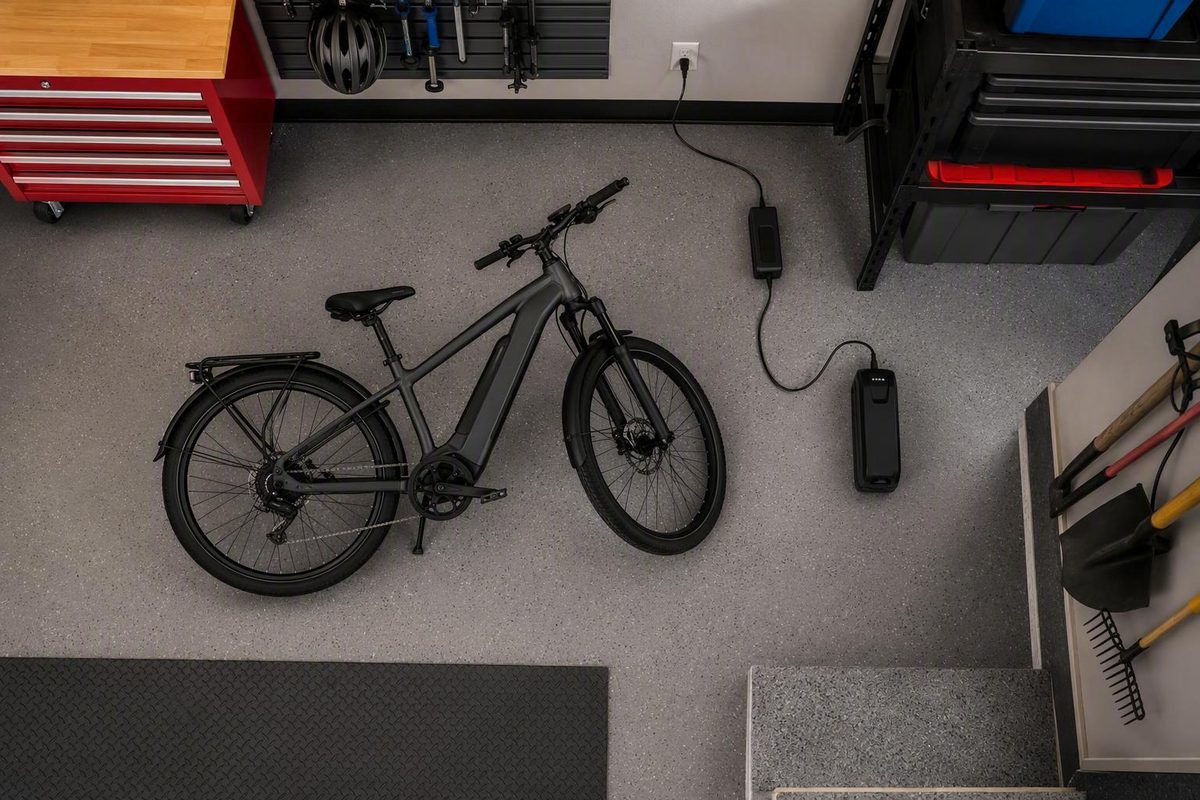
The 2026 federal proposal will not make the uncertified e-bike already charging in your garage compliant: as written, 16 CFR 1265 would apply only to products manufactured after a future effective date and 180-day phase-in. That gap matters against CPSC’s cited toll of 227 micromobility battery incidents from 2019 through 2023, including 39 deaths and 181 injuries. For equipment you already own, the practical protections remain a certified, expressly compatible charger, an uncluttered charging location away from flammables and exits, and no unattended overnight charging (National Law Review).
The proposal is a product-safety rule, not a nationwide ban on charging one e-bike in a residential garage. California’s 2026 requirements also regulate products sold or leased in the state rather than retroactively certifying every battery already in use. Local fire codes, leases and building policies can still restrict where charging is allowed.
Choose how and when you bought the bike; the checker shows which 2026 product rule reaches it and what to fix before the next charge.
This screens the federal proposal and California SB 1271. It does not determine local fire-code, lease, HOA or building-policy restrictions.
Existing-setup gap wins: no cited 2026 product rule covers this 2024 direct-import bike.
Proposed 16 CFR 1265: No retroactive coverage. It was proposed for products manufactured after a future effective date and 180-day phase-in.
California SB 1271: Not applicable in the selected state.
Certification: No relevant mark was found. The rule announcement does not certify existing equipment.
Safe-Garage Actions for This Setup
- Verify that the battery and charger are expressly approved to work together; a matching plug is not proof.
- Charge on a hard, flat surface away from gasoline, propane, paint, cardboard and exits.
- Plug directly into a suitable wall outlet, without an extension cord or power strip.
- Remain awake and present, then unplug when charging is complete.
- Stop if the battery is swollen, damaged, unusually hot, odorous, hissing or recalled.
Coverage Rules Behind the Result
| Product or Transaction | Rule | Trigger | Existing Setup? |
|---|---|---|---|
| Complete e-bike | Proposed 16 CFR 1265 | Manufactured after future effective date and 180-day phase-in | No retroactive coverage |
| Replacement battery pack | Proposed 16 CFR 1265 | Same prospective manufacturing trigger | No retroactive coverage |
| Aftermarket charger | Proposed 16 CFR 1265 | Same prospective manufacturing trigger | No retroactive coverage |
| Conversion kit | Proposed 16 CFR 1265 | Same prospective manufacturing trigger | No retroactive coverage |
| New covered e-bike sold or leased in California | SB 1271 | Generally January 1, 2026 | Point-of-sale coverage |
| Existing uncertified personal e-bike in California | SB 1271 | Existing personal use grandfathered | Not retroactively certified |
| California rental fleet | SB 1271 | Reported January 1, 2028 | Future fleet requirement |
| Used or direct-import transaction | SB 1271 | — Cited summary is not conclusive | Verify statute and guidance |
| More than five devices charged in a covered area | 2024 NFPA 1 model provision | Only where locally adopted | Not a one-bike federal rule |
Sources: CPSC proposal dates and scope as reported by National Law Review and The Cool Down; California SB 1271 dates and coverage as reported by Bike Legal; multi-device threshold from NFPA guidance. Final federal status after August 24, 2026 is — in the supplied evidence.
The Strongest Case for the New Rules
The received view is reasonable: federal regulators have proposed a broad safety standard, California has already imposed certification requirements on covered sales, and both measures target the mismatched batteries and chargers associated with serious fires. New products should gradually become easier to evaluate and harder to sell without system-level testing.
The proposed federal scope is substantial. It includes complete e-bikes, e-scooters, hoverboards, electric skateboards and unicycles, along with replacement battery packs, aftermarket chargers and conversion kits. The proposal reportedly incorporates and modifies versions of UL 2849, UL 2272 and UL 2271. It adds provisions addressing hot-cell charging, reverse polarity, tamper-resistant enclosures, charger compatibility, warnings and cooling instructions (National Law Review).
California is moving in the same direction. A secondary legal account says SB 1271 generally requires covered e-bikes sold or leased in California from January 1, 2026, to meet UL 2849 or EN 15194 requirements. Depending on the product category, UL 2271 or UL 2272 applies to other powered-mobility devices and battery systems. Labels must identify the testing laboratory and standard, and sellers must be able to provide testing documentation (Bike Legal).
That is genuine progress for future purchases. The consensus is right that stronger testing, documentation and charger compatibility can improve the products entering the market. It is wrong only when that protection is assumed to extend to equipment people already own.
The Federal Proposal Leaves Existing Garage Batteries Untouched
CPSC published the proposed rule on June 24, 2026, and the comment period closed August 24, 2026. The supplied evidence does not establish whether CPSC subsequently finalized, revised, extended or withdrew it. A closed comment period does not by itself make a proposal enforceable.
Under the proposal described by the sources, a final rule would take effect after a 180-day phase-in and attach to covered products manufactured after the effective date. Consumers would not be required to discard existing devices. A separate consumer account likewise says the framework regulates how covered products are designed, tested, labeled and sold rather than ordering owners to surrender existing bikes or batteries (The Cool Down).
That creates three practical limits:
| Setup | Proposed Federal Reach | Present Result |
|---|---|---|
| Bike already manufactured | Prospective only | Not retroactively covered |
| Existing replacement pack | Prospective only | Not retroactively covered |
| Existing third-party charger | Prospective only | Not retroactively covered |
| Future covered product | Possible after finalization and phase-in | Current status must be checked |
A certification mark on an existing bike remains useful evidence, but it does not mean the proposed rule has reached backward in time. Conversely, the absence of a mark does not create a federal order to discard the bike under the proposal described here. Damage, recalls and incompatible equipment remain separate reasons to stop using it.
California Regulates Covered Sales, Not Existing Personal Use
SB 1271 was signed on September 27, 2024, according to the cited legal account. Its sales and leasing requirements generally began January 1, 2026, while requirements for rental fleets are reported to begin January 1, 2028.
The law follows the same prospective pattern as the federal proposal. It controls covered products entering California’s market, while existing uncertified e-bikes kept for personal use are grandfathered. It does not convert an uncertified 2024 bike into a certified system or remove it from a garage.
The cited summary does not resolve every edge case involving secondhand sales, existing inventory, direct imports, conversion kits or vehicles that may not legally qualify as e-bikes. Those questions require the enacted statute and current official guidance. The firm’s account also identifies no statewide prohibition on charging one e-bike in a residential garage.
Certification should be read at the system level. UL 2849 concerns an e-bike electrical system. UL 2271 can apply to batteries used in light electric vehicles, while UL 2272 addresses electrical systems for personal e-mobility devices and should not automatically be treated as the e-bike standard.
A UL-style logo alone is not enough. Match the manufacturer, model, product category, standard and testing organization, then confirm that the certification organization lists the product. A certified battery paired with an arbitrary charger is not a certified charging system.
Local Rules Can Still Control the Garage
Federal and state product laws do not settle every charging-location question. A city or fire district may adopt charging provisions, and a landlord, condominium association, HOA or garage operator may impose a written policy where legally permitted.
The clearest model-code threshold in the supplied evidence concerns larger operations. The 2024 edition of NFPA 1 contains requirements when more than five micromobility devices are charged indoors or within 10 feet of a building. Those provisions include listed equipment, compliance with manufacturer instructions, unobstructed exits, no extension cords or power strips, and at least 10 feet between the charging area and combustible materials (NFPA).
NFPA 1 is a model code. It becomes enforceable only when adopted by the relevant jurisdiction, possibly with local amendments. Its cited multi-device threshold does not establish a nationwide 10-foot rule for one household e-bike.
Private and shared garages also present different questions. A homeowner charging one bike in a detached garage is not operating the same kind of space as an apartment bike room containing six devices. In a shared garage, count all devices charging in the relevant room or area, determine who controls the outlet and obtain the current policy in writing.
A lease, parking addendum, condo declaration or HOA rule may cover the complete bike, a removable battery, the charger or all three. Removing the battery from the frame does not necessarily avoid the policy. Where ownership rights or enforcement are disputed, jurisdiction-specific legal advice is more reliable than a verbal instruction or hallway notice.
The Garage Setup Matters More for an Existing Bike
An existing battery receives no new physical protection when a prospective rule is announced. Its condition, charger and surroundings still determine the immediate risk.
Use the charger supplied with the battery or a replacement expressly recommended for that exact battery and e-bike model. Match model numbers and electrical specifications; a connector fitting the socket does not establish compatibility. Avoid generic chargers, improvised adapters, damaged leads and chargers intended for another voltage or battery system.
Plug the charger directly into a suitable wall outlet. NFPA associates micromobility fires with faulty charging equipment, improper charging and overloaded circuits. Its rules for covered multi-device operations prohibit extension cords and power strips, and the same direct-connection approach avoids adding another poorly matched component to a household setup.
Charge on a hard, flat surface where heat can dissipate. Bare concrete or tile may be suitable when the manufacturer permits it. Do not cover the charger or surround it with stored items.
The usual garage flammables wall is the wrong charging location. Keep the bike and battery away from gasoline, propane, paint, solvents, aerosols, cardboard, paper and fabric. The supplied evidence does not establish one universal clearance distance for a single household bike, so follow the manufacturer’s distance and any locally adopted requirement.
Keep the bike, cord and charger away from the door into the house, exterior exits, stairs and pedestrian aisles. This is particularly consequential in an attached garage, where a battery failure can affect both the building and an expected escape route. A fire-rated door or finished wall may provide separation, but it cannot prevent the battery from failing.
Remain awake and present while charging. London Fire Brigade guidance cited in the supplied materials recommends the supplied or manufacturer-approved charger, a hard and flat surface, cooling after use, clear exits, unplugging when charging finishes and no charging while asleep or unattended.
The supplied evidence does not establish that overnight charging is universally illegal. The reason to avoid it is practical: nobody who is asleep or away can respond promptly to abnormal heat, odor, sound or smoke.
Temperature, Damage and Recalls Override Routine Charging
Allow a battery heated by riding to cool before connecting it. Follow the manufacturer’s charging-temperature limits rather than improvising an insulated box, heater or enclosed charging cabinet. If the garage is outside the permitted range, use only another location allowed by the manufacturer and property rules.
Before each charge, inspect the battery for swelling, cracks, deformation, leaking, corrosion, discoloration, unusual odor or excessive heat. Check the charger, leads, connectors and outlet for damage, looseness, discoloration, sparking or heat. Confirm the bike, battery, charger, conversion kit and replacement components are not subject to an active recall.
Stop using equipment that has been dropped, crushed, punctured or altered until the manufacturer or a qualified professional has assessed it. Certification cannot compensate for physical damage, incompatible parts or a recall.
Smoke, popping, hissing, venting, fire or rapidly increasing heat calls for evacuation, not garage troubleshooting. Warn other occupants, leave without crossing the affected area, call emergency services from a safe location and tell responders that an e-bike lithium-ion battery is involved. Do not carry an actively failing battery through the home or re-enter for property.
Smoke detection and a household escape plan can provide warning and help occupants leave. They do not prevent battery failure or make unattended charging safe. Lithium-ion e-bike batteries also do not belong in household trash or ordinary recycling; use the disposal route specified by the manufacturer or local authority.
What the 2026 Rules Actually Change
For a new covered e-bike sold in California, the 2026 mandate can provide meaningful certification and documentation at the point of sale. If the federal proposal becomes final, its broader coverage of complete products, replacement batteries, aftermarket chargers and conversion kits could improve future equipment after the effective date and phase-in.
Neither development retrofits the installed base. Owners of older bikes still need to verify the battery and charger as a matched system, check recalls, inspect for damage and choose a charging location that does not combine a possible battery failure with fuel, cardboard or a blocked exit.
There is no universal federal or California ban in the supplied evidence on charging one e-bike in a residential garage. Local code and written property rules may produce a different answer for a particular garage, especially in shared spaces or where multiple devices are charged. The new product rules improve future purchases; they do not make an existing garage setup safe by declaration.