
Choose a textured heavy-duty epoxy by system build, traction, slab condition and cleaning needs—not by the “non-skid” label alone.
How to specify textured heavy-duty garage epoxy, including aggregate, system build, slab preparation, slip resistance and curing.
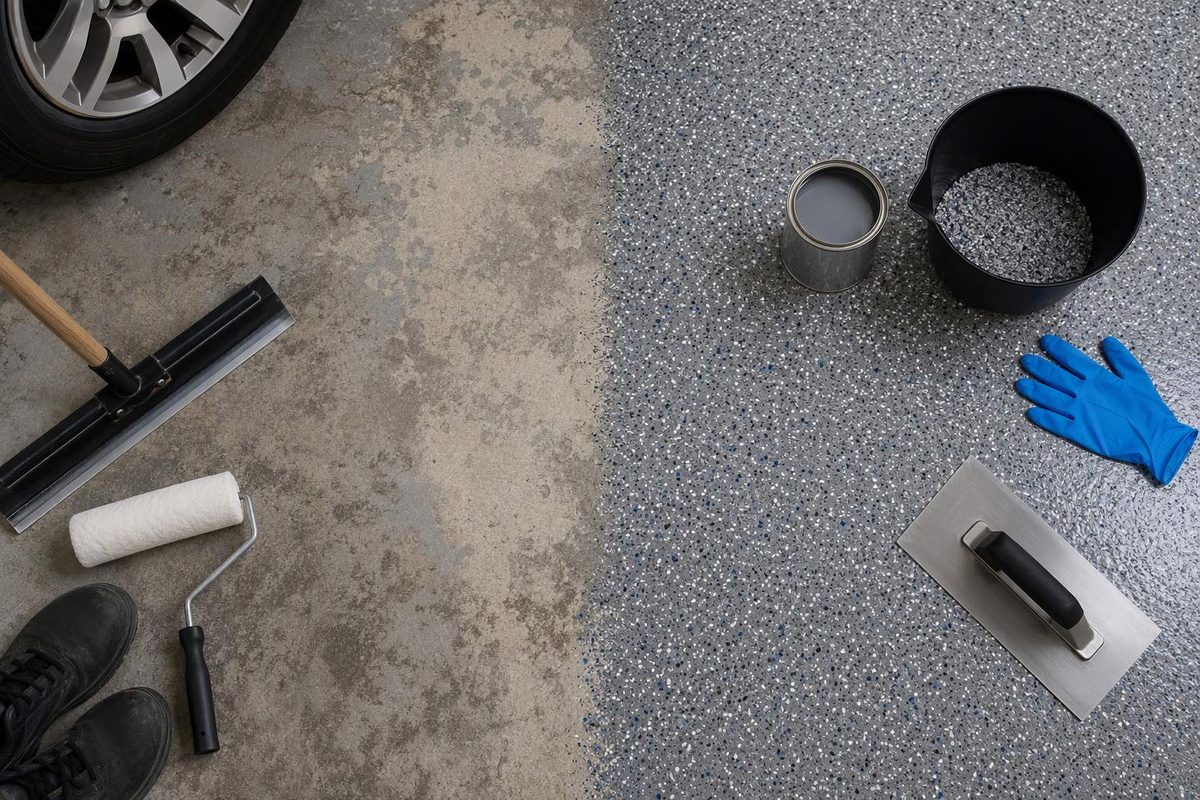
For a garage, heavy-duty textured non-skid epoxy should describe a complete coating system, not merely a one-coat kit with a packet of grit. “Heavy-duty” has little value by itself; a useful specification identifies the primer, epoxy body coat, aggregate, broadcast method, seal or topcoat, installed thickness, surface preparation and cure schedule.
“Non-skid” is also too absolute. The more accurate term is slip-resistant because traction changes with water, oil, dust, footwear, wear and cleaning. A textured floor can still be slippery when contaminated.
Choose the texture for the garage conditions
| Finish | Typical construction | Practical fit | Main compromise |
|---|---|---|---|
| Fine texture | Fine polymer or aluminum-oxide additive in the final compatible coat | Residential parking, workbenches and generally dry garages | Least aggressive texture |
| Medium broadcast | Aggregate scattered into a wet body coat and sealed | Garages that regularly receive rain, snow or wash water | Holds more soil and takes more effort to mop |
| Full broadcast | Dense silica or colored-quartz broadcast followed by the system’s specified seal coats | Busy workshops, wash areas and frequent wet use | Rougher under knees and harder to clean |
| Epoxy mortar with broadcast finish | Aggregate-filled epoxy mortar followed by a textured wearing surface | Rough or deteriorated concrete and demanding impact service | Greater material use and usually specialist installation |
A fine anti-slip additive can be legitimate. Rust-Oleum, for example, specifies an aluminum-oxide additive that can be mixed into or broadcast over compatible wet coatings. Its instructions call for periodic stirring to redistribute settled material and placement in the final coat of a multicoat application (Rust-Oleum technical data). This creates texture, but it does not turn a thin coating into a thick resurfacing system.
Industrial systems make the distinction clearer. Sika separates smooth coatings, aggregate-broadcast systems and aggregate-filled troweled mortars. Its textured broadcast system uses aggregate to increase coating thickness and wear resistance, while its mortar system is intended for heavy-duty chemical, abrasion and impact exposure (Sikafloor MultiDur systems). Sika also describes a heavy-duty quartz system in which mortar first re-profiles rough or deteriorated concrete before a broadcast-and-sealed finish is installed (Sikafloor Quartzite systems).
Select a system, not just more grit
These are reasonable starting points, subject to the selected manufacturer’s system details:
- Parking and light projects: a properly prepared two-part coating system with a fine texture in the final compatible coat.
- Wet-climate garage or frequent washing: a sealed aggregate-broadcast system. If the manufacturer permits different textures by zone, reserve the rougher finish for wet entrances and pedestrian routes.
- Automotive or fabrication workshop: a documented broadcast or mortar system selected for the actual fluids, rolling traffic, impact and cleaning chemicals present.
- Pitted or badly worn slab: patch or re-profile the concrete as the specified system requires. Added grit will not repair a weak or uneven substrate.
More texture is not automatically better. Sherwin-Williams recommends balancing slip resistance with cleanability and matching the profile to expected contaminants and maintenance methods (slip-resistant flooring guidance). An aggressive broadcast may be appropriate near a wash area but unnecessary where the usual task is sweeping sawdust.
A coating also does not increase the structural capacity of the concrete beneath it. If the garage will support a vehicle lift or other concentrated equipment load, evaluate the slab separately; this garage-floor concrete thickness guide explains why thickness alone is not enough.
Put these details in the specification or bid
Before buying a system or comparing installer proposals, get the following in writing:
- Layer sequence: primer, body coat, aggregate, grout or seal coat, and final topcoat.
- Installed thickness: wet- or dry-film thickness for each coat and nominal total thickness, where the manufacturer provides it.
- Aggregate: material, particle or mesh size, and whether it is mixed in, lightly broadcast or applied as a dense/full broadcast.
- Service conditions: residential tires are different from steel wheels, loaded carts, floor-jack traffic and repeated impact.
- Chemical exposure: identify the motor oil, brake fluid, fuel, road salt, battery electrolyte and cleaners likely to reach the floor. Ask for resistance data for the exact system instead of accepting “chemical resistant” as a blanket claim.
- Slip-test information: test method, wet or dry condition, contaminant, test foot and exact finished system tested.
- UV plan: sunlight reaches the strip inside an open garage door. Sika warns that one of its high-build epoxies discolors with UV exposure and that a clear UV-resistant topcoat may not prevent discoloration underneath (Sikafloor-217 data).
- Cure schedule: foot traffic, replacing stored items, light traffic and vehicle traffic can have different wait times. Follow the current data sheet at the actual slab and air temperatures.
Do not compare floors by one coefficient-of-friction number without its test conditions. The Tile Council of North America explains that ANSI A326.3 covers dynamic coefficient of friction testing, specifications and product-use classifications for hard-surface flooring (TCNA overview). Sherwin-Williams’ resin-flooring summary also notes that a passing value does not establish suitability for every project; use, contaminants, maintenance and wear remain part of the selection (guide to slip resistance).
Stop if the slab is not ready
Texture cannot compensate for a weak bond. Stop and resolve:
- damp concrete or an unexplained moisture source;
- curing compounds, sealers or oil contamination;
- loose, dusty or spalled concrete;
- a poorly bonded or incompatible existing coating;
- moving cracks or cracks with vertical offset.
Preparation requirements vary by system. Rust-Oleum’s residential EpoxyShield data sheet limits that product to sound concrete without a moisture problem, calls for damaged areas to be repaired and warns that sealed concrete may not bond properly (EpoxyShield technical data). Higher-build professional products may require mechanical profiling to a stated Concrete Surface Profile. ICRI explains that the necessary profile depends on the coating, substrate and jobsite; its high-build example uses CSP 3–5, not a universal preparation rule (ICRI surface-preparation overview).
Use the preparation method required by the selected system’s current data sheet. Grinding concrete can generate respirable crystalline silica; OSHA associates exposure with silicosis, lung cancer, COPD and kidney disease (OSHA crystalline-silica overview). If mechanical profiling is required and suitable dust control, protective equipment and training are not available, stop and arrange professional preparation.
For the complete sequence from slab inspection through curing, use this garage epoxy flooring installation plan. If cracks remain unresolved, assess them before coating with the checks in garage floor cracking.
Buying rule
For a genuinely heavy-duty garage floor, look for a documented broadcast or mortar system over verified sound concrete, with texture selected for the wettest and dirtiest conditions expected. In an ordinary residential garage, a lighter texture may be the better floor because it remains easier to sweep, mop and work on.
Do not buy solely on “100% solids,” “industrial grade” or “non-skid.” Buy the layer schedule, preparation standard, aggregate specification, relevant test data and written cure limits.