
What One or Two Garage Door Torsion Springs Cost Installed
Compare installed torsion spring replacement budgets for one spring or a pair, plus service fees, cycle ratings, warranty terms and safe repair limits.
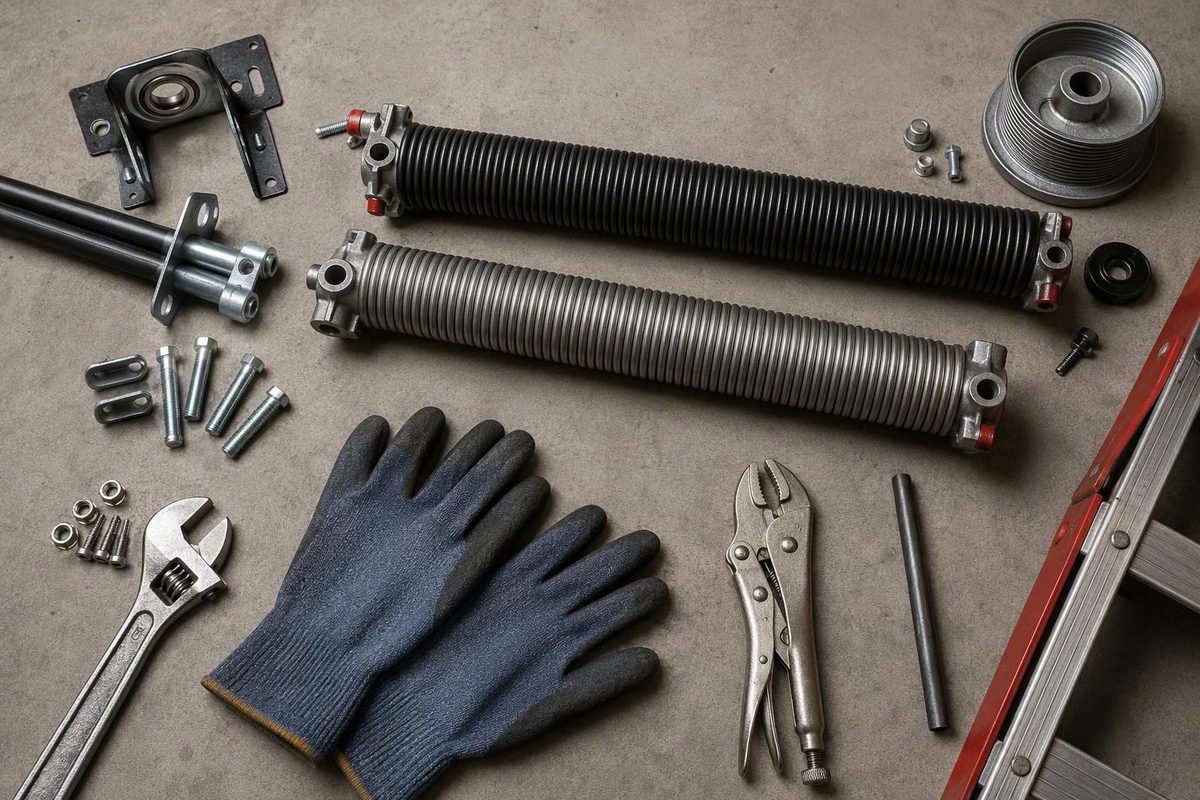
For a U.S. residential garage door, budget roughly $150–$500 to replace one torsion spring or $250–$750 to replace a pair, including parts and labor. These are installer-published planning ranges, not guaranteed local prices or an independently measured national average. Door Serv Pro lists those ranges; Quality Overhead Door publishes a narrower $150–$350 per torsion spring installed. All amounts below are U.S. dollars. (Door Serv Pro, Quality Overhead Door)
Before comparing quotes, establish whether the price covers one spring, both springs on one door, or a larger repair package. Two springs are not the same thing as two garage doors.
Choose the spring count; optionally enter your installed quote to compare it with the planning range.
Installed Quote Comparison
Use the total for the selected spring count, including parts and labor. Blank means unknown.
Planning range for one torsion spring
$150–$500 installed
Quote: —. Enter an installed total to compare it with this range.
A range comparison does not establish whether a quote is fair or includes the right work.
Scope Limits and Quote Checks
These ranges apply to U.S. residential repairs. Heavy or oversized doors, high-cycle upgrades, after-hours service and additional hardware may cost more; separate ranges for those jobs are —.
Confirm spring specification, cycle rating, visit fees, applicable tax, warranty coverage and door-balance testing. Two springs means a pair on one door, not two doors.
Source: Door Serv Pro’s installed-cost guide: one torsion spring $150–$500; a pair $250–$750. Installer-published planning ranges, not a measured national average.
Installed Prices Depend on the Repair Scope
| Repair scope | Planning budget | Confirm in the quote |
|---|---|---|
| One torsion spring | $150–$500 | Spring specification, labor and service-call fee |
| Two torsion springs on one door | $250–$750 | Both springs, labor and cycle rating |
| Heavy or oversized door, high-cycle upgrade, or after-hours service | May exceed the standard range | Upgrade, emergency charge and additional repairs |
The first two ranges come from Door Serv Pro’s installed-cost guide, which identifies door weight, cycle rating, emergency timing and related hardware repairs as price drivers. The sources do not establish a separate dollar range for every heavy-door, high-cycle or emergency repair.
For a concrete local comparison, Level Up Garage Door advertises $350 installed for a standard torsion-spring pair on a typical residential door in Arizona’s East Valley, including parts and labor with no trip fee. It says heavier, oversized and high-cycle applications may cost more. That is one operator’s local price—not a national benchmark. (Level Up Garage Door)
A retail spring price is not comparable with a completed repair. The installed quote also needs to account for selecting the correct spring, managing stored tension, balancing the door and testing operation. A low parts-only price does not tell you what the finished job will cost.
Same-Age Springs Usually Warrant a Pair Quote
Some doors have a single torsion spring; others have two. Conventional torsion springs sit on a shaft above the door, unlike extension springs that stretch along the horizontal tracks. You can photograph the existing arrangement from a safe position without touching it. (Clopay’s spring guide)
On a two-spring door with springs of the same age, ask for a pair-replacement quote. Both have experienced the same door cycles, so replacing both can reduce the chance of another breakdown and another service-call charge. DASMA recommends replacing both springs on a two-spring door even if one is unbroken. That does not establish a predictable failure date for the remaining spring. (DASMA safety tips)
If one spring was replaced recently, tell the technician and provide the invoice if available. Ask whether retaining it is appropriate for the required spring combination and door balance. Do not assume that every door needs two new springs simply because one broke.
The useful comparison is between complete, compatible repairs. A one-spring quote and a pair quote are different scopes, even when both describe the work simply as “spring replacement.”
Compare Written Totals, Spring Ratings and Warranty Coverage
Request a written total before authorizing work. These details determine whether two quotes cover the same repair:
| Quote item | What the written quote should state |
|---|---|
| Spring count and specification | One or two springs, with the quoted cycle rating—not just “heavy duty” |
| Labor, visit fees and tax | Whether the diagnostic or trip charge is included, added or credited; whether applicable tax is included |
| Higher-cycle upgrade | Separate upgrade price and stated cycle rating |
| Additional hardware | Which cables, bearings or drums need replacement, and why |
| Warranty | Parts coverage, labor coverage and any future visit charge for a covered failure |
| Completion checks | Door-balance and operation checks after replacement |
Door Serv Pro identifies cycle rating, cables, bearings and drums as relevant quote items. Quality Overhead Door also recommends confirming labor, inspection and warranty coverage.
For additional hardware, ask the technician to show the wear or damage before approving extras. Do not handle tensioned hardware yourself. Keep the spring-replacement price separate from optional upgrades and other repairs so you can see what is driving the total.
A quote above the planning range is a reason to ask for an explanation and, if the door can safely remain unused, a comparable second quote—not automatic proof of overcharging. A heavy door, higher-cycle spring package, emergency visit or damaged hardware may change the scope. Make sure both quotes cover the same spring count, rating and hardware before treating the lower total as the better offer.
Leave a Suspected Broken-Spring Door Unused
If the door is fully closed, leave it closed rather than repeatedly trying the opener or attempting to lift it. If it is raised, crooked or off-track, keep people away and request urgent professional assistance; do not attempt to lower it yourself.
Do not pull the emergency release on a raised door with a suspected broken spring: disconnecting the opener can allow it to fall. (Broken-spring safety guidance) See what to do with a broken-spring door by position.
Torsion-spring replacement is specialist work, not a sensible parts-only DIY saving. DASMA’s warning labels say not to adjust, repair or remove springs and connected counterbalance parts because extreme tension can cause serious injury or death. That boundary includes cables and bottom brackets—not just the spring itself. (DASMA safety labels)