
Choose a Clear Coat That Matches Your Epoxy Garage Floor
Check clear-coat compatibility, sunlight, wet traction and recoat timing before adding a protective finish to an epoxy garage floor.
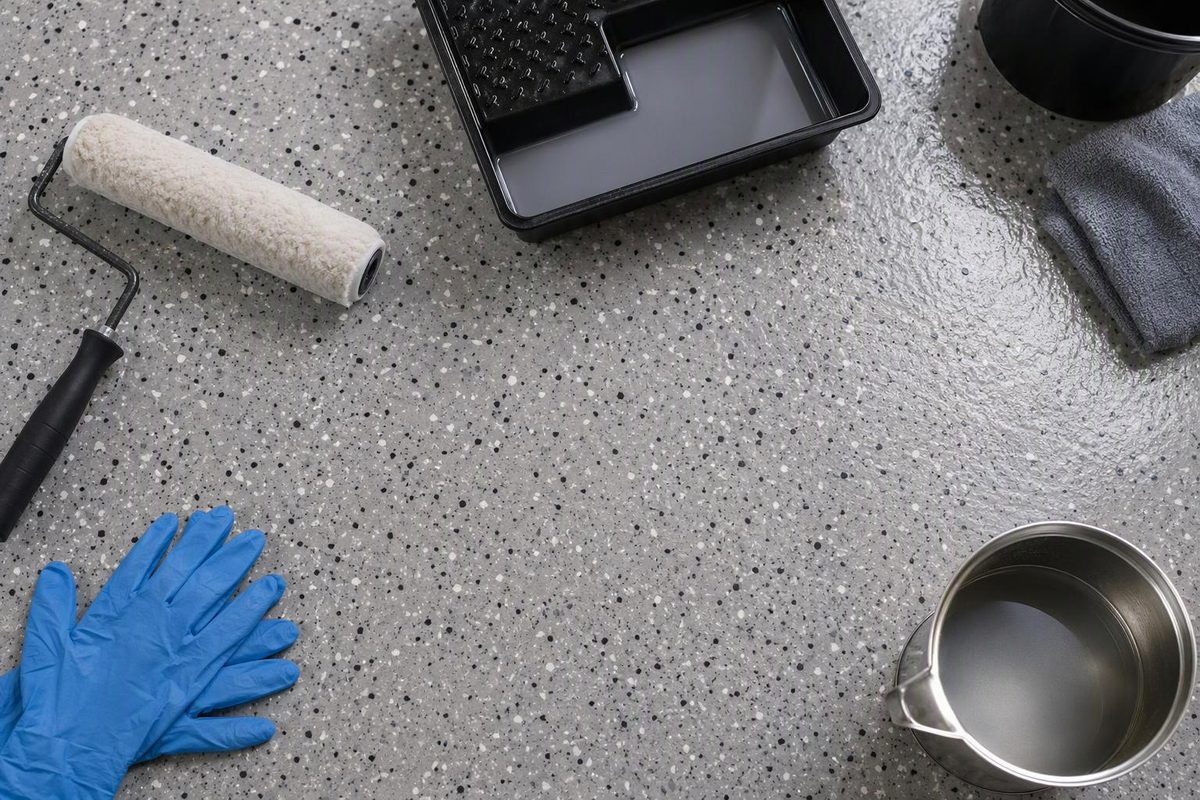
You can clear-coat an epoxy garage floor, but the topcoat must be approved for the coating underneath. A compatible clear finish can add wear resistance and gloss. It cannot make a peeling base coat sound. Check sunlight restrictions if the coating will extend to a sun-exposed garage threshold.
Start with the existing floor’s product name—not just the word “epoxy.” Then check compatibility, surface condition, recoat timing and vehicle-ready cure time before buying.
Choose the topcoat by the floor system
A clear coat over epoxy does not have to be epoxy itself. The practical choices include:
| Clear-coat type | When to consider it | What to verify |
|---|---|---|
| Two-part clear epoxy | An enclosed garage where the base-coat manufacturer approves it | Direct-sunlight restrictions, recoat preparation and wet traction |
| Aliphatic polyurethane | A system specifying it for increased chemical or abrasion resistance | The exact approved epoxy base and application requirements |
| Clear polyaspartic | A decorative flake or quartz system needing a UV-resistant, quick-curing finish | System compatibility, working time and coverage over the textured surface |
These are system choices, not interchangeable upgrades. For example, Rust-Oleum’s EpoxyShield Premium Clear is a two-part epoxy intended for indoor use; its technical sheet excludes areas exposed to direct sunlight. Sika allows an aliphatic urethane over its Sikafloor-225 N epoxy when increased chemical and abrasion resistance is required. Its Sikafloor-515 polyaspartic is designed as a UV-resistant clear topcoat over quartz or flake broadcast systems.
If the base coat is already approved as the finished wearing surface, do not assume a clear layer is compulsory. Add it for a defined purpose or because the specified system requires it. A generic concrete sealer is not a substitute for a documented compatible topcoat.
Check the existing epoxy before recoating
Inspect tire paths, the doorway and stained areas. Look for peeling edges, blisters, loose flakes and patches that remain soft or sticky.
Stop if the base coat is lifting or has not cured correctly. Resolve that failure before covering it. Rust-Oleum’s clear-finish technical sheet requires an adhesion check on previously painted floors and removal of poorly bonded paint; it also warns that loose or damaged concrete will prevent proper performance.
If the old coating’s identity is unknown, ask the proposed topcoat manufacturer for a preparation and compatibility procedure. A small test area following that procedure is more useful than coating the entire garage and hoping the layers bond.
For peeling tied to slab condition or moisture, use the broader garage epoxy installation plan before treating this as a cosmetic recoat.
Separate fresh epoxy from an older floor
Fresh epoxy: The base coat must be ready to receive another layer, and the clear must go down within the allowed overcoat window. Protect the surface from traffic and contamination while waiting.
Older, fully cured epoxy: Expect cleaning and mechanical deglossing if the manufacturer requires them. Remove sanding dust and let any cleaning moisture dry completely. Use only the specified cleaner or solvent; do not improvise a solvent wipe. Concrete etch is not a replacement for scuffing an intact coating—Rust-Oleum specifies its etch for bare surfaces only.
Do not borrow another product’s timing. Rust-Oleum’s support guidance allows Premium Clear after the base dries hard or after 24 hours, with up to seven days without additional preparation if the floor remains clean and untrafficked. Its March 2018 technical sheet says five days. If your kit instructions and online guidance differ, get confirmation for your exact product rather than choosing the longer window.
Plan traction, material and working time
A glossy clear finish can become slippery when wet. Decide on the manufacturer-approved traction additive before mixing. EpoxyShield’s instructions place its anti-skid additive in the final topcoat and require frequent stirring to limit settling. For a garage that regularly receives rain or snowmelt, see the textured garage coating guide.
Measure the area and use the coverage rate for your actual surface and specified thickness. EpoxyShield Premium Clear lists up to 450–500 square feet per kit over coated surfaces; treat that as an upper limit, not guaranteed coverage. Sika also notes that its published coverage figures do not allow for surface profile, porosity or waste.
Set out tools and plan your route to an exit before activating the coating. Published pot lives vary sharply: the EpoxyShield technical sheet lists 60 minutes at 70–80°F and 50% relative humidity, while Sikafloor-515 lists about 15 minutes at a material temperature of 68°F. Follow the exact product’s mixing and application instructions at your actual conditions—not a shared schedule for “clear coat.”
Apply safely, then wait for vehicle readiness
Follow both components’ safety data sheets for gloves, eye protection, ventilation and any respiratory protection. “Low odor” does not mean exposure is safe; NIOSH specifically warns that smell is not a reliable safety indicator. Stop if you cannot provide the required controls. Before sanding an old coating, also check the product instructions’ dust precautions; Rust-Oleum’s technical sheet warns that removing old paint may release lead dust.
Apply at the specified air, material and floor temperatures, maintain a wet edge, and avoid puddles or excessive thickness. Keep people, pets and vehicles off the floor for the applicable cure period.
Walking time is not parking time. EpoxyShield’s technical sheet allows light foot traffic in 12–16 hours but vehicle traffic only after three days under its stated conditions; colder conditions can extend drying. Schedule the garage’s return to use from the final clear-coat application—not from when the colored epoxy went down.