
Epoxy Is Peeling in Your Garage: Patch or Strip It?
Diagnose peeling garage epoxy, check the remaining coating’s bond, and decide whether to patch a small area or remove the failed floor system.
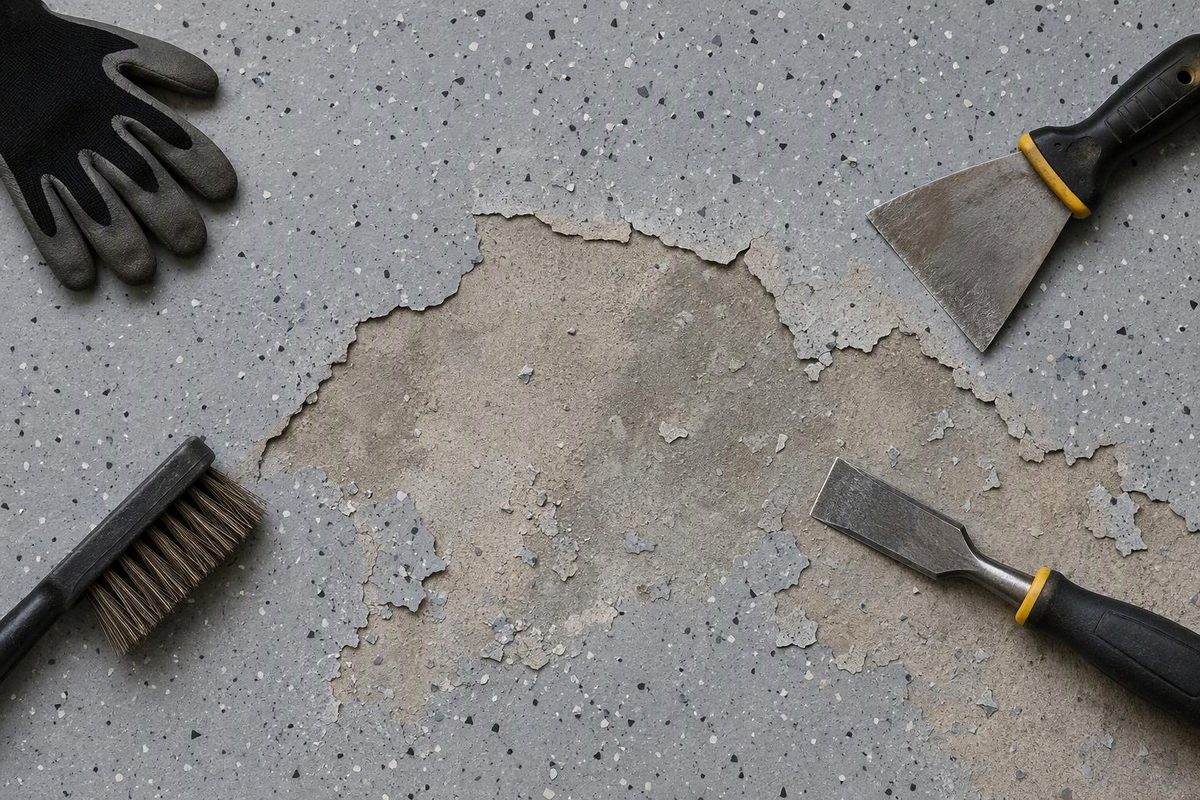
If your garage-floor epoxy is peeling, don’t roll another coat over the loose edges. First determine what is separating: the coating from the concrete, a newer coat from an older one, or the concrete surface itself.
A small patch may be reasonable when the surrounding coating is firmly bonded and the cause is corrected. Widespread peeling, weak concrete or unresolved moisture calls for investigation before recoating. Rust-Oleum’s existing-coating guidance specifically requires removing loose material and checking the bond of what remains.
1. Look at the failed area before removing it
Move the vehicle away, photograph the damage and save a loose chip if you can do so safely. If an installer warranty may apply, contact the installer before sanding or stripping away the evidence.
Use the following observations to narrow the next check—not to declare a cause from appearance alone:
| What you observe | What to check next |
|---|---|
| Bare concrete beneath a lifted chip | Original cleaning, removal of sealers, surface preparation and slab moisture |
| An older colored layer still on the floor | Compatibility, cleaning, abrasion and recoat timing between layers |
| Powder or crumbling concrete attached beneath the chip | Whether the slab’s surface is sound enough to coat |
| Blisters, damp patches or recurring damage | Moisture in the slab or water entering the garage |
| Peeling concentrated where tires sit | Whether the product permits vehicle traffic and whether its vehicle-ready cure time was followed |
Dust, oil, grease, surface treatments and weak concrete are important checks because a coating needs a clean, sound substrate. Sika’s epoxy coating data sheet requires removing weak concrete, contaminants and loose material, and preparing an open-textured concrete surface.
Also identify the original product from leftover packaging, receipts or the installer’s paperwork. “Epoxy floor” is not enough information to choose a compatible repair or clear coat.
2. Test the coating that still looks intact
The visible peeled spot may not show the full extent of poor adhesion. Check apparently intact areas near the damage and elsewhere in the garage using the coating manufacturer’s recommended procedure.
For recoating with EpoxyShield and RockSolid products, Rust-Oleum’s Canadian support site describes this adhesion screening test:
- Cut an X through the coating down to the concrete with a single-edged razor blade.
- Press a 4-inch piece of duct tape firmly over the X.
- Remove the tape with one quick pull.
- If more than 25% of the surrounding area comes away, Rust-Oleum says not to recoat unless all previous paint is removed.
This is destructive and involves a sharp blade; keep your free hand out of the cutting path. If you cannot cut safely through a thick coating, have the installer or a flooring contractor assess it.
That 25% threshold is Rust-Oleum’s product guidance, not a universal pass mark for every resin floor. A passing spot also does not establish that the whole floor is well bonded or moisture-free.
3. Decide whether to patch or remove the coating
Consider a local patch when:
- Damage is isolated, with a firm surrounding edge.
- The remaining coating passes the applicable adhesion checks.
- Exposed concrete is sound.
- The cause has been addressed.
- The manufacturer confirms a compatible repair and preparation method.
Expect the patch to remain visible: matching the color, flakes, texture and sheen should not be assumed.
Plan broader removal or professional assessment when:
- Coating lifts easily beyond the original spot.
- Several separated areas fail adhesion checks.
- Concrete beneath it crumbles or powders.
- Blisters or dampness recur.
- The existing layers cannot be identified and compatibility cannot be established.
Moisture deserves a stop point. Sika identifies moisture-related blisters and uncertain slab moisture as flooring problems, while its Sikafloor-264 instructions prohibit application over rising moisture and specify moisture measurements before application. Use the proposed replacement system’s current local data sheet, test method and limits; a slab that merely looks dry is not an acceptance test.
4. Repair only after the floor passes those checks
For an isolated failure, agree on the repair system first. Check its label and safety data sheets for handling precautions, protective equipment and ventilation before starting. Sika directs users to the current safety data sheet, and Rust-Oleum’s EpoxyShield instructions warn against skin and eye contact.
Use this sequence as a planning checklist, with the manufacturer’s instructions controlling the exact preparation order:
- Remove all loose coating. Do not leave lifted edges beneath the repair.
- Clean contamination. Follow the manufacturer’s cleaner, rinse and drying instructions.
- Prepare each surface correctly. Bare concrete needs the specified profile; retained coating needs the approved abrasion or bonding-primer procedure.
- Repair damaged concrete with a material approved beneath the coating, allowing its required cure time.
- Remove preparation dust and confirm moisture, temperature and other application conditions.
- Mix and apply the repair within its stated ratio, pot life, coverage and recoat window.
- Keep vehicles off until the specified vehicle-ready cure time, not merely until the surface feels dry. Rust-Oleum’s garage-floor instructions, for example, distinguish foot-traffic times from the longer wait for vehicle traffic.
Rust-Oleum’s previously coated floor instructions illustrate why preparation is system-specific: they provide different routes using abrasion or a compatible primer, and require grinding or shot blasting to remove sealers. Do not transfer those details automatically to another product.
Grinding concrete creates hazardous dust. NIOSH found that a grinder shroud connected to local exhaust ventilation could reduce exposures. If you cannot control dust safely—or an old, unidentified coating may require hazardous-material assessment—stop before mechanical removal. See our concrete-grinding safety and preparation guide.
A clear coat is not a substitute for repairing a failed bond. Only consider clear-coat selection and recoating once the underlying floor is sound.